How Animation Technology Works: From Traditional to AI Creation
Introduction
Animation technology works by creating the illusion of movement through a series of images displayed quickly one after another. Although each image is slightly different from the previous one, the human brain combines them into a continuous moving scene. This simple concept has developed into a highly advanced technology that powers movies, video games, advertisements, educational content, virtual reality experiences, and digital storytelling.
The journey of animation has changed dramatically over time. Earlier, animators created every frame manually through drawings, while modern creators use computer software, motion capture systems, and artificial intelligence to produce detailed and realistic animations. Today, animation combines creativity, design, science, and technology to bring imaginary worlds and digital characters to life.
Understanding the Basic Concept of Animation Technology
The foundation of animation is based on the principle of persistence of vision. The human eye retains an image for a short period after seeing it, allowing multiple images shown rapidly to appear as moving visuals. Animators use this natural ability of human vision by displaying a sequence of frames at a specific speed.
Each frame represents a single image or moment of movement. When hundreds or thousands of frames are combined together, they create complete scenes with character movements, expressions, and actions. The smoothness of animation depends on factors such as frame rate, design quality, movement accuracy, and the technology used during production.
Modern animation technology allows creators to control every aspect of a scene, including character design, lighting, camera movement, sound effects, and visual effects.
The Evolution of Traditional Animation
Traditional animation was the earliest method used to create animated films and characters. It depended completely on the skills, imagination, and patience of artists who manually created every frame.
In traditional hand-drawn animation, artists first created a storyboard to plan the entire sequence of events. A storyboard acts as a visual guide that shows important scenes, character actions, and camera movements. After planning, animators created keyframes, which represented major movements or important moments in a scene.
For example, if a character was walking, the animator would first draw the important positions, such as the beginning of the step and the ending position. Other artists then created additional drawings between these keyframes to make the movement look natural and smooth.
Each drawing was carefully prepared, colored, and combined with backgrounds and sound to create the final animation. Although this process required enormous effort and time, it created some of the most memorable animated films in history and established the foundation of modern animation.
How Stop Motion Animation Works
Stop motion animation is another traditional technique that creates movement using physical objects instead of drawings. In this process, artists create models, puppets, or objects and capture photographs of them while making small changes in position between each photograph.
When these images are played continuously, the objects appear to move. Stop motion requires detailed planning because even a small movement must be carefully controlled. This technique is still used today because it provides a unique handmade appearance that digital animation often tries to recreate.
The Development of Computer Animation Technology
The introduction of computers completely changed the animation industry. Computer animation made the production process faster, more accurate, and more flexible. Instead of creating every frame manually, artists could now design digital characters and environments using advanced software.
Computer animation is mainly divided into two major categories: 2D animation and 3D animation.
How 2D Computer Animation Works
2D computer animation creates movement in a two-dimensional space using digital drawings and graphics. It works similarly to traditional animation but uses software instead of paper.
Artists create characters, backgrounds, and objects digitally and then control their movements through animation tools. Modern 2D animation software allows creators to adjust timing, add effects, edit scenes, and make changes without recreating entire sequences.
This type of animation is commonly used in cartoons, educational videos, mobile applications, advertisements, and online content because it is efficient and visually appealing.
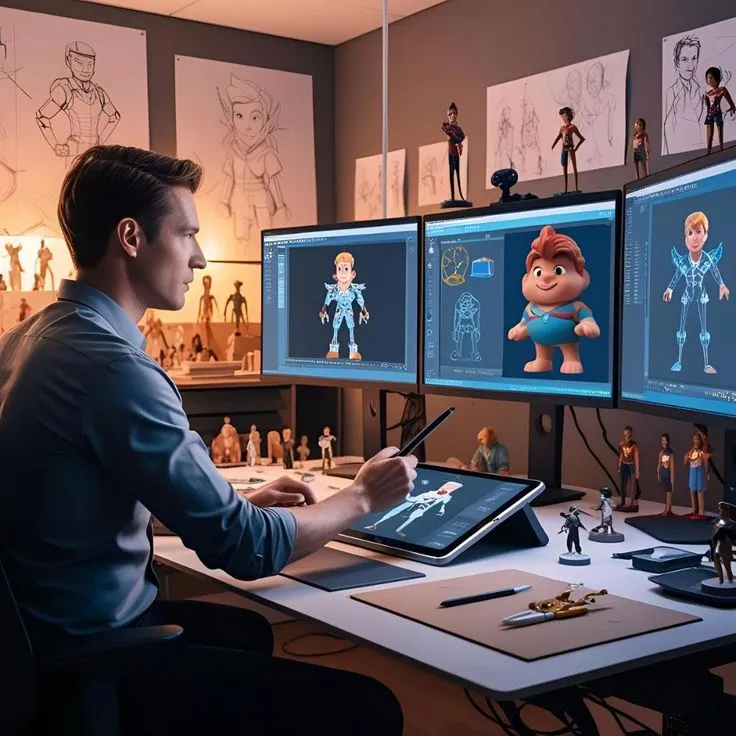
How 3D Animation Technology Works
3D animation creates digital objects and characters that have depth, allowing them to appear realistic from different angles. It is widely used in modern movies, video games, architectural designs, and virtual simulations.
The process begins with modeling, where artists create the shape and structure of digital characters or objects. Using specialized software, they build detailed models that represent real or imaginary designs.
After modeling, artists apply textures to give surfaces realistic appearances. Texturing adds details such as skin, clothing patterns, colors, and material effects. This step helps digital objects look more natural.
The next stage is rigging, where animators create a digital skeleton inside a character. This skeleton allows artists to control movements such as walking, running, facial expressions, and body actions.
After rigging, animators create movements by adjusting the character’s position across different frames. Finally, rendering technology processes the completed scene by adding lighting, shadows, colors, and visual effects to produce the final animation.
The Importance of Motion Capture Technology
Motion capture technology has improved the realism of modern animation by allowing digital characters to copy human movements. This technology records the actions of real actors through cameras and sensors and transfers those movements to animated characters.
For example, when an actor performs a running or fighting movement, motion capture systems record the body movements and convert them into digital data. Animators then use this information to create realistic character actions.
Motion capture is widely used in blockbuster movies, video games, and virtual reality experiences because it helps create natural movements that would be difficult to animate manually.
How Artificial Intelligence Is Changing Animation
Artificial intelligence has introduced a new stage in animation development. AI-powered animation tools can assist creators by reducing repetitive work, generating creative ideas, and improving production speed.
AI systems can analyze images, videos, and movements to create animations automatically. They can help generate character designs, improve visual quality, and create realistic movements from simple instructions.
One major advantage of AI in animation is automated animation generation. Instead of manually adjusting every movement, AI tools can study patterns and create basic animations based on text descriptions, reference images, or recorded movements.
AI is also improving facial animation and voice synchronization. Modern systems can match character lip movements with dialogue and create realistic facial expressions based on emotions. This technology is especially useful in video games, digital characters, and interactive media.
However, AI works as a supporting technology rather than a replacement for human creativity. Storytelling ability, artistic decisions, and emotional connection remain essential parts of successful animation.
Applications of Animation Technology in Different Industries
Animation technology is used in many fields beyond entertainment. In the film industry, animation helps create imaginary worlds, fantasy characters, and special effects that cannot always be produced through traditional filming.
In education, animated videos make difficult topics easier to understand by converting complex information into engaging visual explanations. Medical institutions use animation to demonstrate human body functions, treatments, and scientific processes.
Businesses also use animation for marketing and advertising because animated content can explain products and services in a simple and attractive way. Companies use animated videos to increase customer understanding and improve communication.
The gaming industry depends heavily on animation technology to create realistic characters, environments, and interactive experiences. Modern video games combine advanced graphics, artificial intelligence, and real-time animation to provide immersive experiences.
The Future of Animation Technology
The future of animation technology will be influenced by artificial intelligence, virtual reality, augmented reality, and real-time rendering systems. These technologies are expected to make animation creation faster and allow more people to produce professional-quality content.
AI tools will continue improving animation workflows by helping creators generate ideas, automate technical tasks, and enhance visual quality. Real-time rendering technology will allow artists to see animation results instantly instead of waiting for long processing times.
Virtual reality and augmented reality may also create new forms of interactive storytelling where audiences become part of animated environments rather than simply watching them.
Despite technological advancements, creativity and storytelling will remain the most important elements of animation. Technology provides powerful tools, but human imagination gives animation its meaning and emotional impact.
Conclusion
Animation technology has developed from simple hand-drawn images into an advanced combination of art, computers, and artificial intelligence. Traditional animation created the foundation of animated storytelling, while computer graphics and AI have expanded the possibilities of what creators can achieve.
Today, animation influences entertainment, education, healthcare, marketing, and many other industries. As technology continues to evolve, animation will become more realistic, accessible, and innovative, creating new opportunities for artists and audiences around the world.