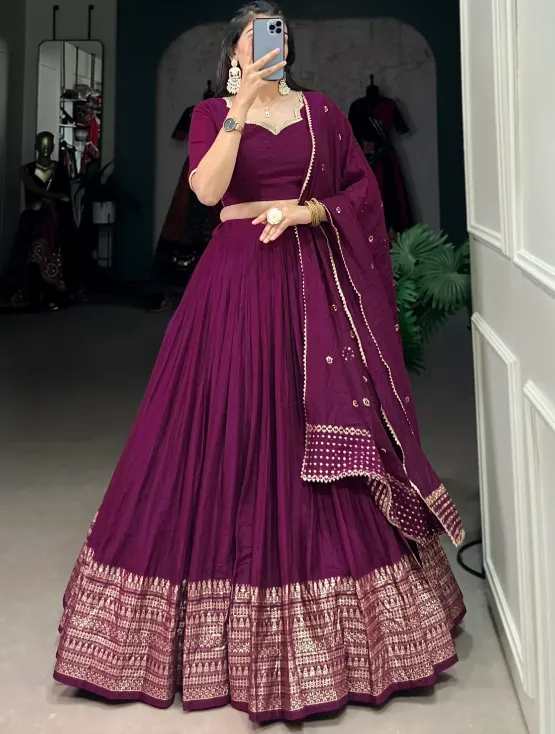
A wedding outfit should feel special, but visual richness does not have to come from maximum weight or decoration. A Lehenga choli for wedding can look grand through fabric, colour depth, proportion, and carefully placed embroidery rather than dense work across every surface.
This approach is especially useful for long celebrations. When the outfit is designed around balance, it can photograph beautifully, feel ceremonial, and remain easier to wear through rituals, greetings, meals, and dancing.
Start With One Clear Source of Richness
Before looking at embellishment, decide what will give the outfit its strongest sense of occasion. It could be the fabric, the colour, the border, the blouse, or the dupatta.
If the lehenga uses a rich woven fabric, the embroidery can stay more controlled. If the fabric is lighter, stronger surface work may provide the festive depth. Giving one element the leading role keeps the outfit from becoming visually crowded.
Use Embroidery Where It Creates the Most Impact
Embroidery does not need to cover the entire skirt to look luxurious. Strategic placement can create a stronger finish while keeping weight manageable.
Effective areas include:
-
A detailed hem that frames the flare
-
Vertical motifs that emphasise skirt panels
-
Concentrated work around the waistband
-
A richly embroidered blouse with a quieter skirt
-
A statement dupatta border that ties the look together
Spacing matters too. Leaving some fabric visible allows individual motifs to stand out and keeps the design from looking flat in photographs.
Let Fabric and Lining Work Together
Outer fabric creates the visual effect, but lining determines how comfortable the outfit feels after several hours. Net, georgette, silk blends, and other occasion fabrics all behave differently when layered or embroidered.
Check whether the inner layer feels smooth against the skin and whether the skirt keeps its shape while sitting. A heavy border on a very light base may pull downward, while too many stiff layers can make movement difficult.
During a trial, walk, sit, and turn rather than judging the lehenga only while standing.
Use Maroon for Depth Instead of Extra Decoration
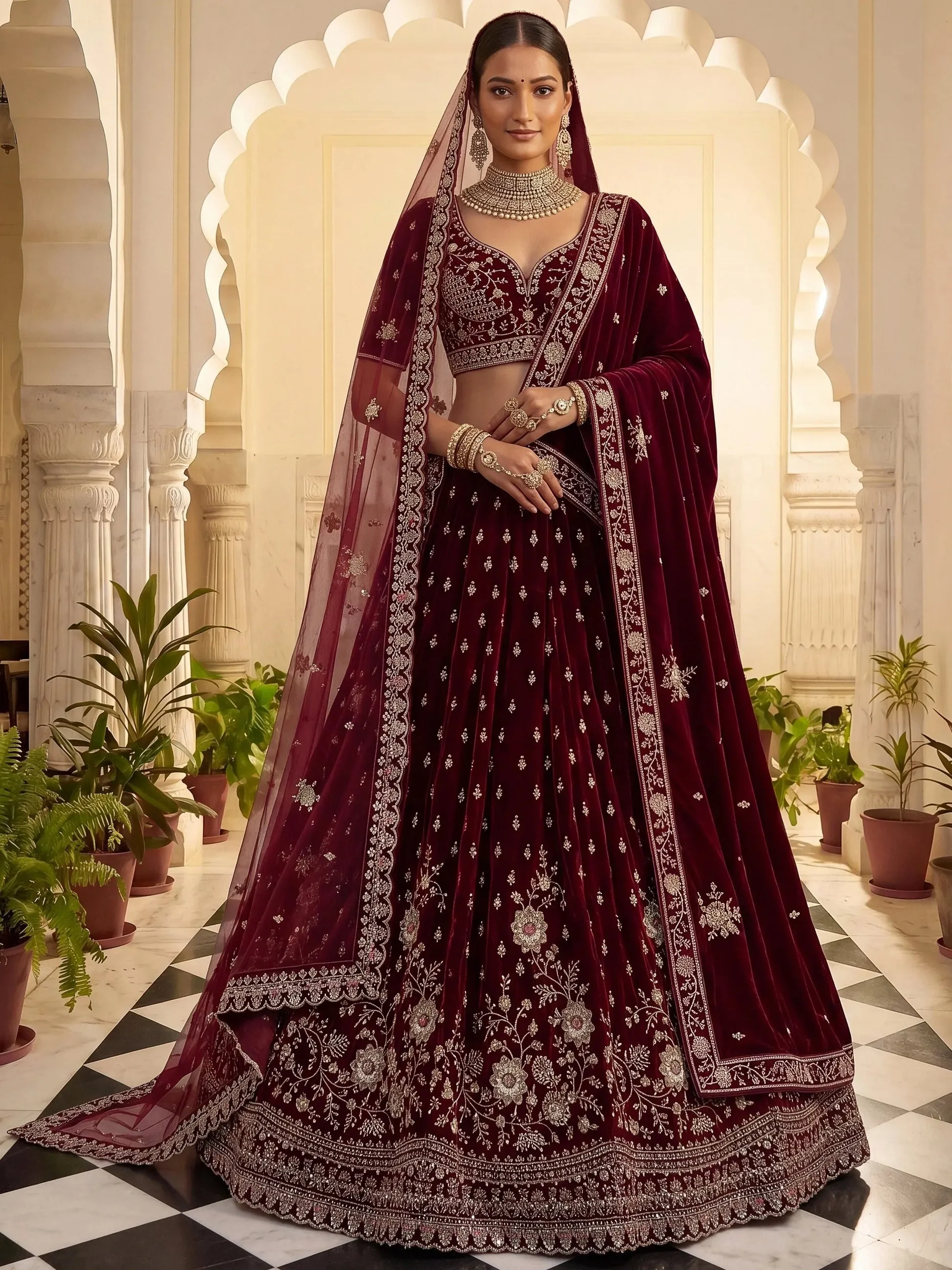
A maroon bridal lehenga can create strong bridal presence through colour alone. Maroon has enough depth to feel ceremonial under evening lighting, which means the outfit does not always need dense embellishment to appear formal.
Gold can warm the colour and create a traditional mood, while antique finishes add a slightly softer, heritage-inspired effect. Ivory, blush, or muted green accents can introduce contrast without weakening the richness of the base.
This makes maroon useful when the goal is grandeur through colour and texture rather than sheer weight.
Balance the Blouse Against the Skirt
The blouse should not automatically repeat every detail used on the lehenga. If the skirt has strong embroidery, a cleaner blouse can create better proportion. If the skirt is relatively simple, the blouse can carry more intricate work.
A few balanced combinations are:
-
Heavy skirt with a structured, lightly embroidered blouse
-
Plain or tonal skirt with a statement neckline
-
Detailed sleeves with a simpler bodice
-
Rich blouse with a sheer, restrained dupatta
-
Tonal embroidery instead of several contrasting colours
The neckline should also leave enough space for the jewellery you plan to wear.
Make the Dupatta Add Ceremony, Not Bulk
A dupatta can make the outfit feel more bridal without adding much weight to the skirt itself. A defined border, delicate embroidery, or a contrasting shade can bring formality to a relatively controlled lehenga.
For a head drape, lighter fabric is often easier to manage. If a second dupatta is used across the shoulder, it can carry more detail because it does not need to sit directly on the head for long periods.
Test both drapes together before the event so the shoulders and blouse do not feel overloaded.
Edit the Jewellery After the Outfit Is Complete
Jewellery should be the final layer, not the starting point. Once the blouse neckline, dupatta, and embroidery are fixed, it becomes easier to see how much more detail the look actually needs.
If the outfit already has strong gold work, one necklace and coordinated earrings may be enough. A simpler lehenga leaves more room for layered jewellery or a stronger headpiece.
Take a full-length photograph before the wedding. If the garment details disappear behind accessories, remove one piece.
Final Thoughts
A wedding lehenga can feel luxurious without being physically heavy. Colour depth, fabric quality, embroidery placement, blouse proportion, and dupatta styling can create just as much impact as dense embellishment.
The best result is one where every detail has a purpose. By building richness selectively, the outfit can retain its bridal presence while remaining comfortable enough to enjoy the celebration rather than constantly manage the clothes.