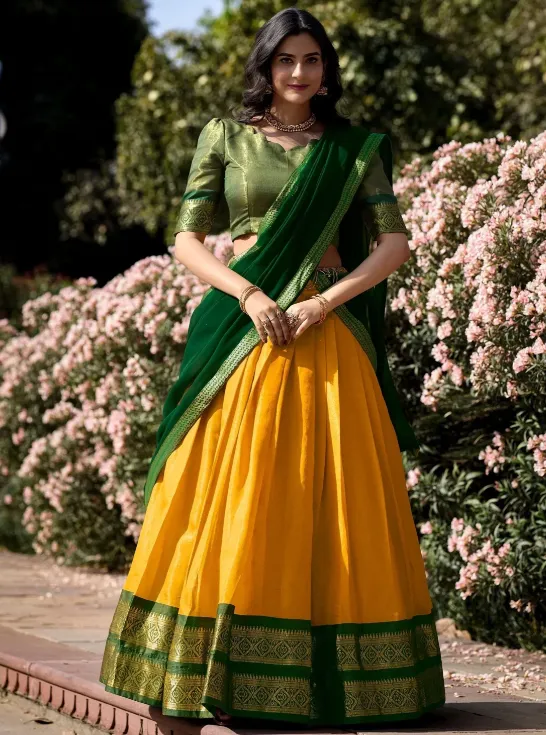
Many young women love the idea of the half saree but hesitate to wear it outside a family ceremony, worried it may look like a costume. It does not have to. A modern South indian lehenga in the right colour and cut can feel as current as any contemporary outfit, as long as you treat it as clothing rather than a performance.
Understanding What You Are Wearing
The half saree, called langa voni or pavadai in different regions, has three parts: a long skirt, a fitted blouse and a draped cloth worn over the shoulder. In several South Indian communities, it traditionally marks a girl’s step into young adulthood.
Knowing this history helps you wear it with ease. It was always meant for young women, in daily life and at celebrations, so it carries comfort and freedom as much as formality. Nothing about it demands stiff posture or solemn faces. Many women still wear it for temple visits and festivals every year.
Finding the Right Cut and Fabric
A half saree lehenga brings the traditional shape into a ready-to-wear form, with the draped cloth pinned in place for the classic look. Silk blends and brocade give the authentic feel, while georgette and net suit warmer weather and long afternoon functions.
Choose a skirt with a gentle flare instead of a very wide one, since it moves better and photographs cleanly. A contrast border on the draped cloth adds a classic touch without extra jewellery or heavy embroidery competing for the eye. Test the pinning at home so the fall of the cloth is already familiar.
Pairing Colours the Southern Way
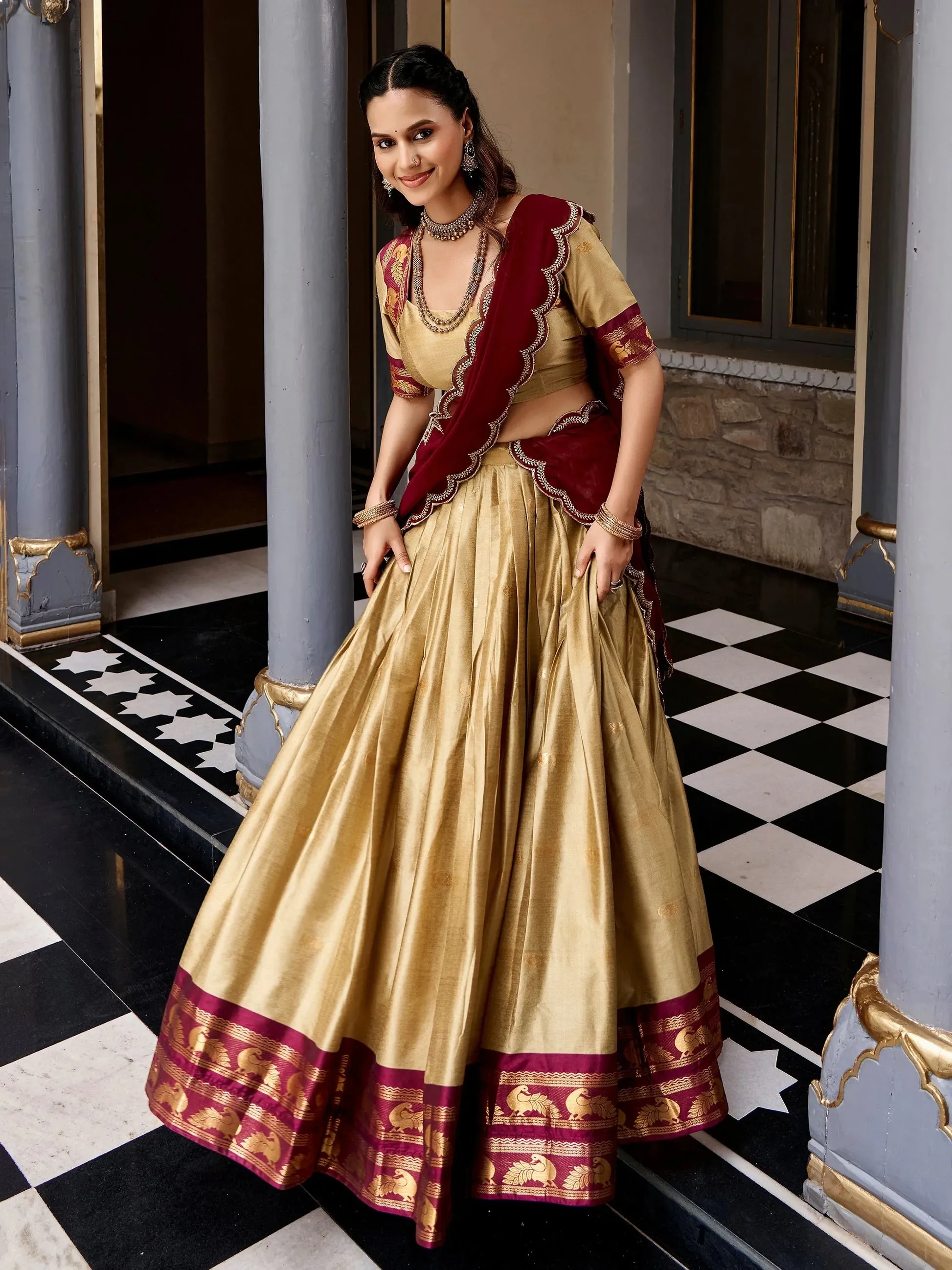
South Indian festive dressing loves contrast. Think bottle green skirts with magenta blouses, or mustard with deep maroon. These pairings feel bold in a good way, and they work well in the bright light of temple courtyards and daytime functions.
For a softer, modern look, try a pastel skirt with a darker blouse, or keep a single tone across the whole set. Match the border colour of the draped cloth to the blouse so the three pieces unite neatly. Photographs in daylight will show these combinations at their best.
Styling Without the Costume Feel
Keep jewellery balanced. A pair of jhumkas and a slim necklace often looks lovelier than a full temple set. Choose a loose braid with fresh jasmine or a neat low bun in place of elaborate hair ornaments that might overwhelm the outfit.
Let one element stand out. If the skirt is heavily woven, pick a simple blouse. Try wearing the ensemble to a smaller function first, like a family lunch, so it feels natural long before the bigger occasions arrive on your calendar. Little by little, you will find your own balance.
Comfort and Movement
The half saree is among the most comfortable festive outfits, since the skirt is stitched and the draped cloth can be pinned securely. Check the waist closure and pin placement before leaving home, so nothing shifts when you climb steps or sit on the floor.
Carry a small safety pin kit and keep the blouse fit comfortable around the arms. Dance, eat and take photographs without worrying. When an outfit lets you forget it, you carry it with pride, and the tradition feels completely alive.
Making It Work Beyond Festivals
A half saree need not wait for a festival. Try a plain silk skirt with a contrast blouse for a cousin’s engagement, a graduation photo or a temple visit. Wearing it more often builds familiarity, and the outfit stops feeling reserved for special days only.
Pass your pieces on, too. A well-kept skirt can serve a younger sister or cousin years later, and the blouse can be reworked by a tailor. That sense of continuity is the real heart of the half saree, and it makes every wearing a small piece of family history.
Photographing the Look Well
The half saree photographs beautifully in natural light, so plan your pictures for mid-morning or late afternoon. Stand near a window or an open doorway, and let the skirt fall naturally instead of arranging every fold. Gentle movement, such as a slow turn, gives images a lovely sense of flow.
Ask a friend to take a few candid shots while you talk or laugh. Those photographs usually look better than stiff poses, and they show how comfortable the outfit really is. Keep one or two for your own wardrobe notes, so you remember which colour combinations suited you best the next time you shop.